

“`html
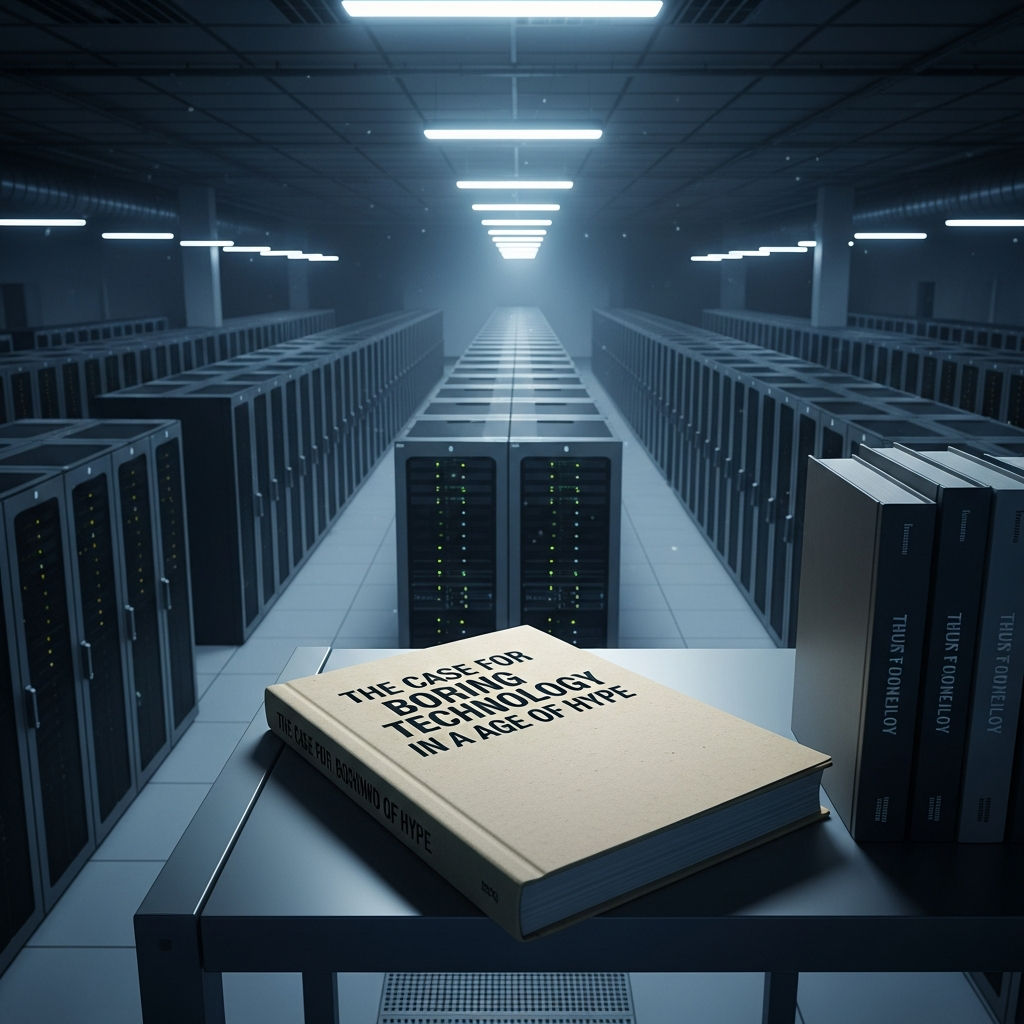
The Case for Boring Technology in an Age of Hype
In the fast-paced world of software development, the “next big thing” is always just one tweet or GitHub trending project away. From the meteoric rise of generative AI to the complex promises of Web3 and the endless stream of JavaScript frameworks, the tech industry is addicted to novelty. We are taught that to be competitive, we must stay on the “bleeding edge.”
However, there is a growing movement of seasoned engineers and successful CTOs who are pushing back. They are making a radical argument: The best technology is often the most boring technology. In an era defined by hype cycles, choosing stable, well-understood tools is not a sign of stagnation—it is a strategic competitive advantage.
What is “Boring Technology”?
When we talk about “boring technology,” we aren’t talking about obsolete or “bad” tech. Instead, boring technology refers to tools, languages, and frameworks that have a high degree of predictability. These are systems where the failure modes are well-documented, the community is vast, and the ecosystem is mature.
- Relational Databases: PostgreSQL and MySQL.
- Languages: Java, Python, PHP, and C#.
- Architectures: Monoliths or simple REST APIs.
- Infrastructure: Proven cloud providers or even bare-metal Linux servers.
Boring technology is “boring” because it doesn’t surprise you at 3:00 AM on a Sunday. It doesn’t have “unknown unknowns.” When something goes wrong, a quick search on StackOverflow yields a decade’s worth of solutions rather than a “closed-issue” thread on a beta repository.
The Innovation Token Framework
One of the most influential concepts in the case for boring tech is Dan McKinley’s “Innovation Tokens.” The premise is simple: every organization has a limited amount of capacity for novelty. You can think of these as “Innovation Tokens,” and you usually only have about three of them to spend on any given project.
If you choose to use a brand-new, unproven graph database, you’ve spent a token. If you decide to write your backend in a functional language that no one on your team knows, you’ve spent another. If you try to implement a cutting-edge microservices mesh at the same time, you are officially out of tokens.
When you run out of tokens and hit a technical wall, your project stalls. By using boring technology for 90% of your stack, you save your innovation tokens for the things that actually matter: your unique business logic and the problems your customers are paying you to solve.
The True Cost of the Bleeding Edge
Choosing “hype-driven development” comes with hidden costs that rarely appear in the initial marketing pitch of a new framework. These costs can eventually cripple a growing startup or an enterprise initiative.
1. The Difficulty of Hiring and Retention
It is easy to find a developer with ten years of experience in Java or Python. It is incredibly difficult—and expensive—to find someone with deep expertise in a framework that was released six months ago. Furthermore, while developers love learning new things, they quickly tire of fighting “tooling bugs” that wouldn’t exist in more mature ecosystems. Stability in the tech stack often leads to higher long-term developer satisfaction.
2. The Maintenance Burden
New technologies evolve rapidly. This means frequent breaking changes, deprecated APIs, and a constant need to refactor just to keep the lights on. Boring technology, by definition, is stable. Code written in a mature language five years ago is much more likely to run perfectly today than code written in a “trendy” framework from the same era.
3. The “Un-Googleable” Bug
In a mature ecosystem like PostgreSQL, if you encounter a performance bottleneck, there are thousands of blog posts, books, and experts who can help you tune your queries. In a bleeding-edge “NewSQL” or experimental NoSQL database, you might be the first person in the world to encounter a specific edge-case bug. At that point, you aren’t building a product; you are debugging someone else’s experimental software.
Predictability: The Ultimate Business Metric
From a business perspective, the most important attribute of a technology stack is predictability. Stakeholders want to know when a feature will be shipped and how much it will cost to maintain. Boring technology allows for accurate estimation.
When you use a proven stack, you can predict how it will scale, how much memory it will consume, and how it will behave under load. This allows the business to focus on market fit and customer acquisition rather than constant firefighting in the infrastructure layer. Revenue is exciting; the database that facilitates that revenue should be boring.
When is it Right to Use New Technology?
Advocating for boring technology is not a plea for Luddism. If we never adopted new tools, we would still be writing assembly code on punch cards. The key is to be intentional about when to deviate from the norm.
You should spend an innovation token when a new technology provides a transformative advantage that boring technology cannot match. For example:
- Using Rust when memory safety and extreme performance are non-negotiable requirements for a systems-level project.
- Leveraging Large Language Models (LLMs) if your core product depends on advanced natural language processing that was previously impossible.
- Adopting Serverless architectures if your workload is highly intermittent and requires massive, instant scaling that traditional VPS setups can’t handle.
The goal is to ensure that the “newness” of the technology is directly tied to the value proposition of the company.
The Maturity of the “Boring” Ecosystem
One of the greatest ironies of the “boring vs. hype” debate is that boring technologies are often more powerful than their hyped counterparts. Because they have been around for decades, they have incorporated the best features of their competitors.
PostgreSQL, for instance, now handles JSON data with incredible efficiency, often rivaling specialized document stores. Java’s modern iterations have introduced functional programming features that make it as expressive as many newer languages. By choosing the “boring” option, you often get the benefits of modern innovation without the instability of a new ecosystem.
Conclusion: Ship Value, Not Just Code
In the end, customers do not care if your backend is written in the latest trendy language or if your database uses a revolutionary consensus algorithm. They care that the application is fast, reliable, and solves their problems.
The case for boring technology is a case for professionalism and focus. By leaning on the giants of the past—stable languages, proven databases, and robust architectures—engineers free themselves from the shackles of constant maintenance and hype-induced anxiety. Boring technology isn’t just a safe choice; it is the most effective way to build a sustainable, scalable, and profitable future.
Next time you start a project, ask yourself: “Am I trying to solve a business problem, or am I just looking for an excuse to learn a new tool?” If the answer is the former, go with the boring choice. Your future self (and your stakeholders) will thank you.
“`