Top QLED TV discounted by 1000 dollars
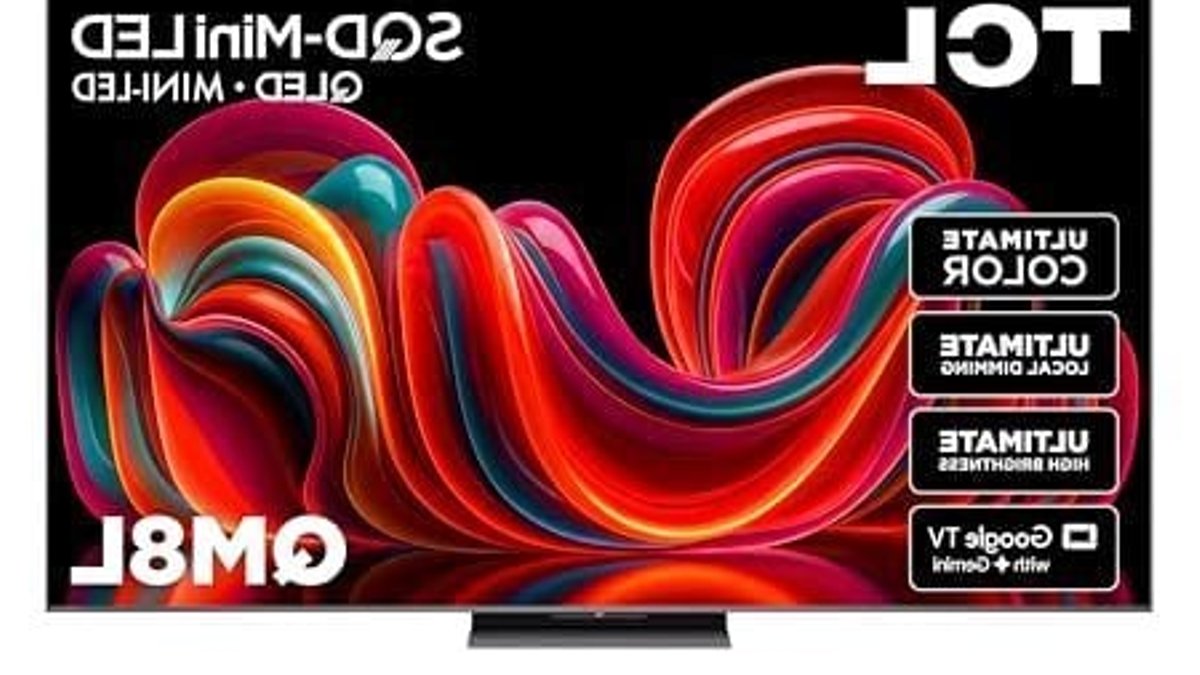
TCL’s QM8L series has dropped to its lowest price since launch, making the 65‑inch model available for $1,497.99 after a $1,002 discount.
Brightness remains a key selling point.
Specs that set the QM8L apart
The QM8L’s “Zero Border” bezel gives the screen a near‑frameless appearance, a design cue that many higher‑priced competitors use. More than looks, the panel boasts a claimed peak brightness of 6,000 nits, a figure that dwarfs the brightest OLEDs, which top out around 700 nits.
TCL also advertises up to 4,000 local dimming zones, a level of backlight control that should limit blooming and deliver contrast levels that approach OLED performance. For gamers, the TV supports a native 144 Hz refresh rate, eliminating motion blur in fast‑moving titles.
Related: Next Up for Stuart Little Fans
The built‑in “Filmmaker mode” aims to preserve accurate color and luminance for movie‑passionate viewers without the need for manual calibration. Audio is handled by Dolby Atmos‑ready speakers from Bang & Olufsen, offering a sound profile that exceeds the average TV‑integrated system.
Pricing, sizes and market context
Amazon listings show the 75‑inch version priced at $1,697.99, down from $1,998. The 85‑inch model lists for $2,797.99, a $1,202 reduction from $3,999. The largest 98‑inch option now sells for $4,497.99, shaved by $1,502 off its former $5,999 price.
All sizes are part of the same 2026 lineup, which includes a 144 Hz panel, QLED technology, and the same speaker system. These discounts are confirmed by price‑tracking tools that monitor historical data.
The current deals represent the deepest cuts since the series debuted in April, suggesting a strategic push to clear inventory ahead of newer models.
While the TV’s specifications sound impressive, the real‑world impact depends on viewing conditions. In bright rooms, the high nits rating can help maintain vivid images, but in dim settings the extra brightness may be less noticeable.
Related: LEDs worsen light pollution problem
The sheer number of dimming zones promises fine‑grained control, yet actual performance will hinge on the TV’s processing algorithms, which are not publicly detailed.
From a broader perspective, the price drop reflects a trend where manufacturers compress cutting‑edge specs into more accessible price points. As QLED technology matures, the cost gap between it and OLED narrows, giving consumers more options without sacrificing peak performance.
The QM8L’s positioning illustrates how competition can drive value for shoppers seeking large‑format displays with strong brightness and decent sound without a separate audio system.
Consumers interested in the QM8L should verify the current price on retailer sites, as promotions can change quickly. The TV’s feature set aligns with both home‑theater enthusiasts and gamers, offering a blend of visual and audio capabilities that were once reserved for higher‑end models.

Next Up for Stuart Little Fans


