China details crewed moon landing plans
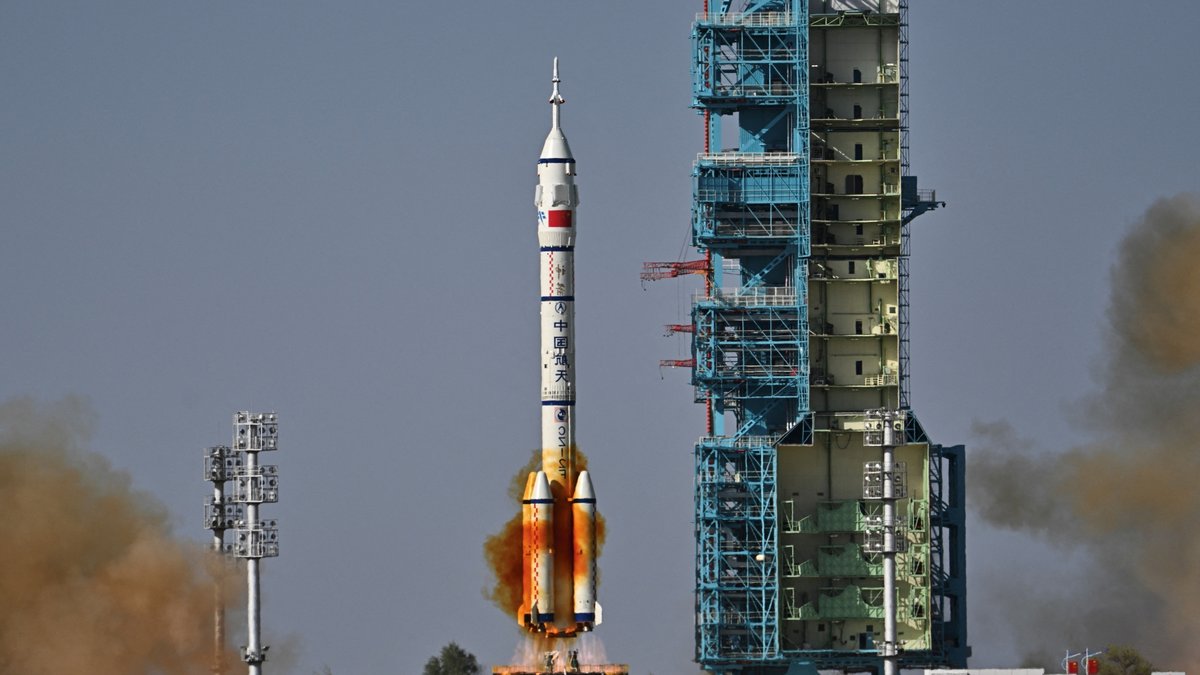
China has outlined its most detailed public plan for a crewed lunar landing before 2030, detailing a series of test missions that will lead up to the attempt. The roadmap, revealed at the 7th Manned Space Symposium in Beijing, describes a mission architecture built around two launches and a lunar lander capable of carrying three astronauts, with two of them descending to the surface.
The approach relies on two Long March 10 rockets: one to deploy the Lanyue lunar lander into lunar orbit and another to send the Mengzhou crewed spacecraft. Once in orbit, the two vehicles will dock, allowing two astronauts to transfer to the lander for the descent. After three Earth days of surface activities, the astronauts will ascend back to the Mengzhou spacecraft and return to Earth.
The plan begins with uncrewed tests in Earth orbit as early as 2027, using a modified Long March 10A rocket to launch the Mengzhou spacecraft to China’s Tiangong space station. These flights will verify the rocket’s reliability before advancing to lunar missions. In 2028, an uncrewed test of the full three-stage Long March 10 will send the Lanyue lander to the Moon for a landing and ascent trial. The following year, 2029, will feature a full-scale rehearsal in lunar orbit, with Lanyue and Mengzhou launching separately and docking—a critical step before the crewed mission.
The surface mission will mirror the scale of later Apollo landings, with astronauts conducting daily extravehicular activities over three days. While exact scientific goals remain unspecified, the duration suggests a focus on sustained exploration. Preparations at the Wenchang spaceport are already underway, with social media footage showing hardware being readied for rehearsal missions. The pace indicates China is proceeding without further delays.
China’s cautious but bold lunar timeline
China’s methodical approach contrasts with NASA’s Artemis program, which aims for a crewed lunar landing with Artemis 4 in early 2028. NASA’s timeline faces uncertainties, including the readiness of commercial lunar landers from SpaceX and Blue Origin. China’s incremental testing phase may reduce technical risks before involving astronauts. Although China has never landed humans on the Moon, its robotic Chang’e program has achieved multiple firsts, including the first far-side lunar landing in 2019 and sample returns in 2020 and 2024.
If successful, China’s mission would make it only the second country after the United States to land astronauts on the Moon. The U.S. remains the primary competitor, but other nations—including India, Japan, and Russia—have expressed lunar ambitions, though none are as advanced as China’s current plan. The next phase of testing will determine whether China can meet its pre-2030 deadline, with the 2027 uncrewed cargo missions to Tiangong serving as a critical early step.
Read Also: Karbonn Relaunches Budget Smartphones in India’s Competitive Market
The China National Space Administration (CNSA) oversees the program, with the China Manned Space Agency (CMSA) managing crewed missions. The China Aerospace Science and Technology Corporation (CASC), a state-owned enterprise, develops the rockets and spacecraft. Wang Xiang, deputy chief designer of China’s manned space program, presented the roadmap at the Beijing symposium, emphasizing a cautious but aggressive timeline.
Step-by-step testing begins with Earth-orbit trials
The 2027 uncrewed cargo missions to Tiangong will serve as the first operational test of the Long March 10A rocket. These flights will verify the rocket’s performance, including its ability to carry the Mengzhou spacecraft to orbit and support docking procedures with the station. The missions will also assess the lander’s systems in a controlled environment, using Tiangong as a staging point for rehearsals. Footage from Wenchang shows containers labeled with hardware components, indicating preparations for these early tests are already underway.
The 2028 uncrewed lunar landing test will mark the first attempt by the Lanyue lander to perform a full descent and ascent from the Moon’s surface. This mission will use the full three-stage Long March 10 rocket, which includes side boosters for increased payload capacity compared to the 10A. Success here will clear the path for the 2029 rehearsal in lunar orbit.
2029 rehearsal will push autonomous docking limits
The 2029 rehearsal will be the most complex test before the crewed landing, requiring two separate Long March 10 launches, one for the Lanyue lander and another for the Mengzhou spacecraft. Once in lunar orbit, the two vehicles must autonomously dock, a maneuver critical for the crewed mission’s success. This step will replicate Apollo-era rendezvous but with a divided launch approach, differing from NASA’s integrated Saturn V system. The rehearsal will also test the lander’s separation and re-docking sequence, ensuring safe crew transfers between vehicles.
China’s lunar lander, Lanyue, is designed to support two astronauts for three days on the surface, with daily extravehicular activities planned. The lander’s ascent stage will carry the crew back to lunar orbit, where they will re-dock with the Mengzhou spacecraft for the return to Earth. Unlike earlier Chang’e robotic missions, which focused on short-duration surface operations, the crewed mission will prioritize extended human presence, aligning with NASA’s Artemis goals but with a more incremental testing phase.
The program’s success hinges on the reliability of the Long March 10, which has not yet flown a crewed mission. Unlike the Long March 5, used for robotic lunar missions, the 10 series is tailored for human spaceflight, featuring redundant safety systems. The 2027 cargo missions will be the first opportunity to demonstrate these systems in orbit before lunar operations begin. If delays occur in any phase, the 2030 timeline could face pressure, though China has historically maintained tight control over its space schedules.


